Before social media, West Coast saltwater fishing ran on message boards. Not one board — dozens, split by region, by species, by boat type and by argument. This page is a reference on how that structure worked and what each part of it carried, because the board layout was not arbitrary: it mapped almost exactly onto how the fishery itself is divided.
This page describes the discussion-board format and the fishing subjects such boards recorded. It does not reproduce individual anglers' posts or identify their authors.
Why the Format Mattered
A fishing report has a short useful life. A tuna school that was biting at eight in the morning is a hundred yards away and uninterested by noon, and forty miles away by the following week. The value of a report therefore decays fast, which means the medium carrying it has to be fast, cheap to post to, and easy to skim.
A threaded message board did all three. Someone came off the water, typed four lines, and posted them. Within an hour three other people had added corrections, a fourth had disputed the location, and a fifth had noted the water temperature where they had been instead. The result was denser and more honest than any single report, because on a coast this small, exaggeration got audited quickly by people who had been in the same water.
How the Boards Were Divided
The structure that emerged, and which persisted for well over a decade, split roughly like this:
Regional boards
A general board carried Southern California inshore and offshore activity — the highest-traffic board by a wide margin. Separate boards covered the East Coast, the Gulf Coast, and Alaska, Canada and British Columbia, mostly for members who travelled. A Spanish-language board served the Baja and Mexican mainland fishery, which matters on this coast because a large share of the offshore fishing happens in Mexican water.
Fishery-type boards
A long range board carried the multi-day offshore trips, which have their own vocabulary, their own seasons and their own gear problems. A private boaters board carried everything from launch-ramp conditions to fuel range planning — a completely different set of concerns from passengers on a chartered boat, and one of the deepest archives on the site. A tuna board split off when offshore traffic outgrew the general board.
Topical boards
Tackle, tide changes, fishing clubs, trip reports, travel information, seafood and cooking, and a politics-and-causes board that in practice meant fisheries regulation. That last one was the least fun and probably the most consequential: closures, marine protected area proposals and bag limit changes were fought over there long before most anglers heard about them anywhere else. The underlying management framework those arguments referred to is published by NOAA Fisheries and the regional fishery management council.
The Archive Habit
Boards were archived in blocks rather than deleted — a general board might roll over every few weeks, a private boaters board every few months, and each closed block stayed readable. That produced an accidental long-run record of the fishery: which years the water was warm, when the yellowtail showed early, which seasons the rockfish closures bit hardest. Anglers used those archives the way a fisheries biologist uses a catch time series, informally and imperfectly, but it worked.
What the Boards Fed On
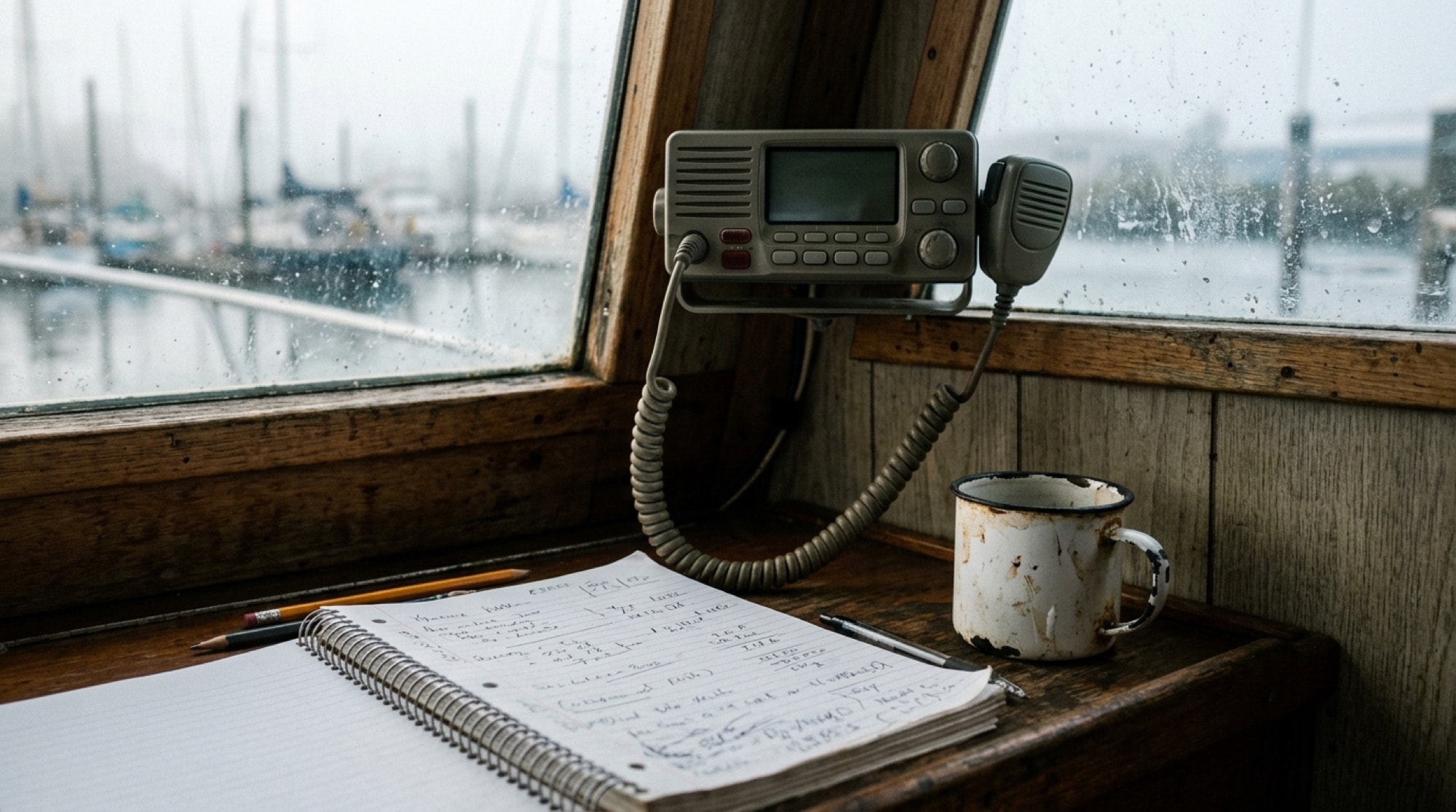
Three inputs kept the boards moving. The first was real-time radio reports relayed from the fishing grounds while the action was still happening. The second was the daily dock totals published by the landings, which gave every narrative claim a number to be checked against. The third was gear discussion — endless, granular and occasionally useful — covered here under tackle categories.
What Replaced Them
Most of that traffic now lives on general-purpose social platforms, in private messaging groups, and on a handful of surviving dedicated forums. The trade is speed and reach for permanence and searchability: a report posted to a group chat is faster to write and effectively unrecoverable a month later. The board archives are the reason anyone can still reconstruct what a given season on this coast looked like, which is a decent argument for the older format even now.
Note. An independent reference. Not affiliated with, endorsed by or connected to the AllCoast fishing community at allcoast.com, nor with any landing, sport boat, tackle company or publication described here. Nothing on this site is bookable, purchasable or joinable, and nothing here is regulatory, safety or navigational guidance.