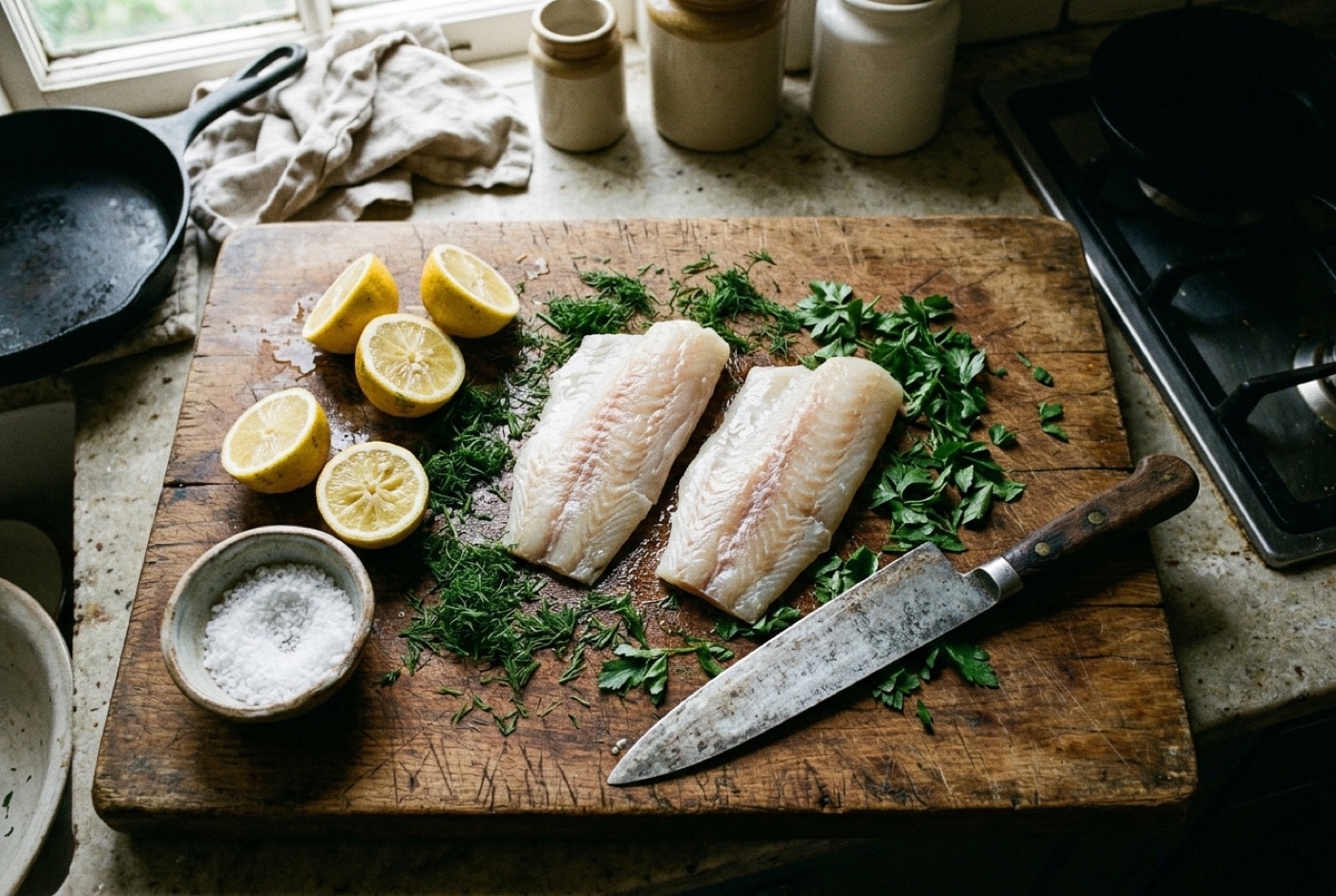
This section focuses on the substance: how to handle fish so that it is worth cooking, and a handful of straightforward preparations that suit West Coast species. The recipes are presented without personal attributions.
Handling Comes First
Almost every complaint about the taste of fresh-caught fish is a handling problem rather than a cooking problem. Three things decide the outcome, and all three happen before the galley.
- Bleed it immediately. Cut the gill arches and let the fish bleed out in water or over the side. Blood left in the flesh is the main cause of strong, metallic flavour, and it is irreversible once the fish has set.
- Chill it fast and hard. An ice slurry — salt water and ice, not dry ice alone — drops the core temperature far faster than a dry box. Texture degrades from the moment a fish warms, and warm fish never recovers.
- Keep it dry after that. Once chilled, fish sitting in meltwater goes soft. Drain it, and store fillets on ice rather than in it.
General storage and cooking-temperature guidance for seafood is published in the FDA guidance on selecting and serving seafood safely, and it is worth reading once properly rather than half-remembering.
Matching Method to Fish
West Coast species fall into rough cooking groups. Oily fish such as salmon and albacore take high dry heat well — grilling, broiling, searing — and need little help. Firm white fish such as mahi mahi, yellowtail and wahoo hold together on a grill and in a pan, and suit marinades and quick cooking. Delicate white fish such as rockfish, lingcod and sanddab do best where they are supported: chowders, gentle poaching, light pan-frying. Using a firm-fish method on a delicate fish is the most common galley mistake.
Broiled Salmon Fillet
Grease a shallow baking tray and lay a large salmon fillet on it, skin side down; the skin can stay on. Spread the top generously with mayonnaise — about half a cup for a large fillet — which sounds unpromising and works, because the fat and egg form a barrier that keeps the flesh from drying out under direct heat. Season with a teaspoon of tarragon, salt and a good grind of black pepper, and lay thin onion rings across the top. Broil for about fifteen minutes, until the surface is browned and the thickest part just flakes. Fresh dill worked into the mayonnaise is a worthwhile addition.
Shrimp Scampi
Melt half a cup of clarified butter in a saucepan and add a quarter cup of olive oil, four to six cloves of finely minced garlic, a quarter cup of chopped fresh parsley, two tablespoons of lemon juice, a tablespoon of coarse mustard, half a teaspoon of black pepper and a couple of dashes of hot sauce. Simmer gently until the garlic is soft — do not let it colour. Over medium-high heat, saute large shell-on shrimp a few at a time, tossing them in the butter, and serve immediately with the pan sauce and bread. Leaving the shells on and splitting them to the tail keeps the flesh from overcooking and makes the sauce cling.
Grilled Mahi Mahi Appetiser
The simplest good thing to do with mahi mahi or any firm white fillet. Slice the fish into thin fillets. Marinate for at least an hour in a mixture of honey and a seeded Asian chilli sauce, in whatever proportion suits your tolerance — the result should be clearly sweet with a hot finish. Cook fast on a very hot grill or in a dry pan, a minute or so a side. The sugar in the marinade will catch, which is the point; do not walk away from it.
Hot and Spicy Fish Chowder
A good use for rockfish, lingcod or any delicate white fish, and for the odd fillets left at the end of a session. Melt two ounces of butter in a heavy pot and soften a finely minced inch of fresh ginger, two cloves of garlic and one small minced hot red pepper. Add a chopped medium onion, half a red and half a green bell pepper chopped, two chopped celery stalks and a tablespoon of dried basil, and cook until everything has softened. Add two large peeled and cubed potatoes and enough stock or water to cover, and simmer until the potato is tender. Add about three pounds of white fish cut into large chunks, and cook gently for a few minutes more — the fish should just set, not break up. Finish with cream if you like it richer. Preparation takes about half an hour, cooking about fifteen minutes, and it serves six to eight.
Quantity and Restraint
The best argument for cooking well is that it makes a smaller catch sufficient. A properly bled, properly chilled fish handled with some care will feed more people better than twice as much fish treated carelessly, which is a practical point as much as an ethical one — see keeping only what you will eat. When buying rather than catching, Seafood Watch publishes sourcing guidance by species and region. What is running locally at any given time is the subject of the local fishery.
Note. An independent reference. Not affiliated with, endorsed by or connected to the AllCoast fishing community at allcoast.com, nor with any landing, sport boat, tackle company or publication described here. Nothing on this site is bookable, purchasable or joinable, and nothing here is regulatory, safety or navigational guidance.