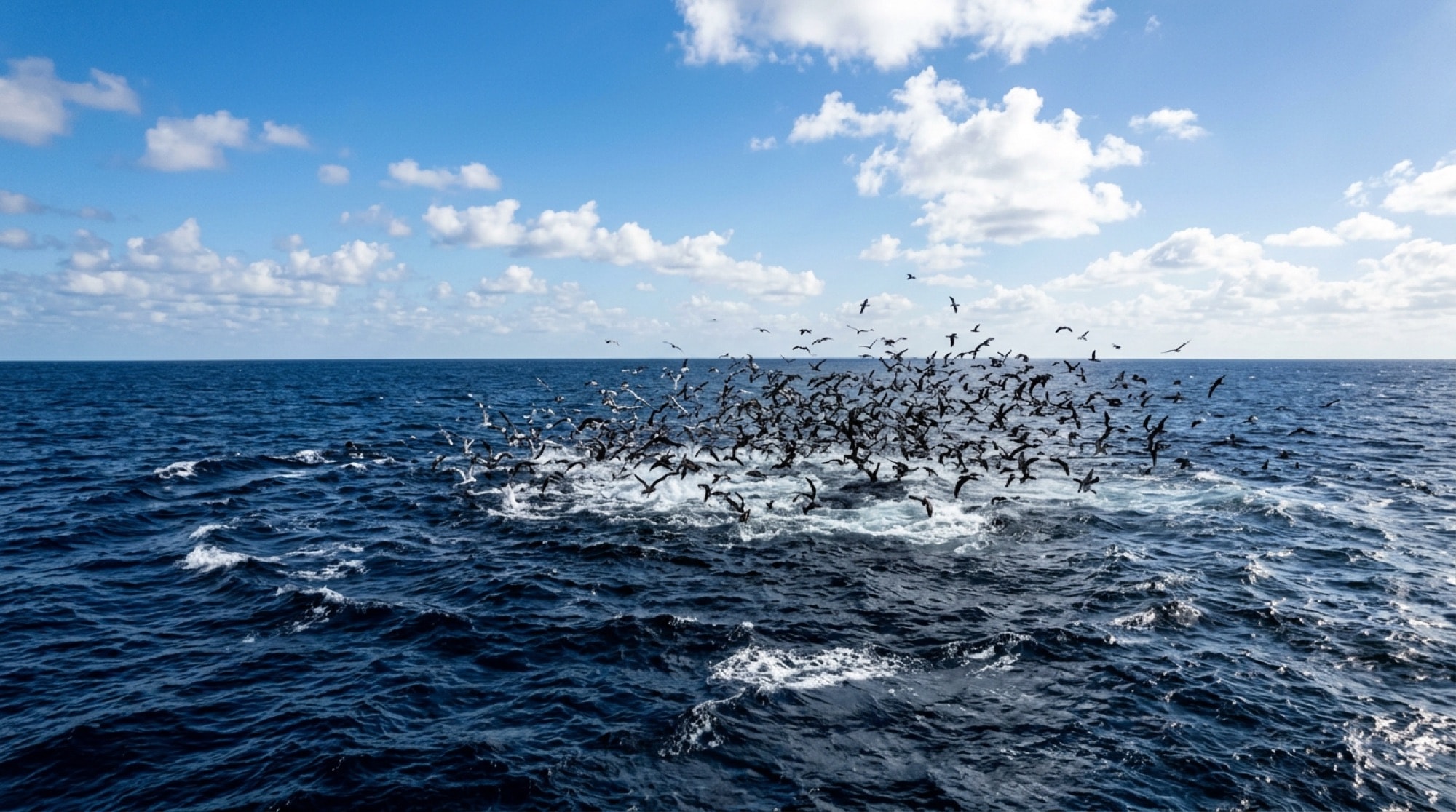
Long range is the fishery this coast is known for internationally, and it is genuinely unusual. Nowhere else in North American recreational fishing do purpose-built vessels leave a single port and stay at sea for a week, ten days or longer, running well over a thousand miles to reach fishing grounds most anglers will never see. This page explains what the fishery is, where it goes, what it targets and how it has been reported.
What Makes It Distinct
An ordinary offshore trip is a day. A long range trip is an expedition. The distances involved mean the vessel carries everything — bait, fuel, tackle, food, freezer capacity for the catch — and the economics mean trips are planned around a target species and a specific set of grounds rather than around whatever happens to be biting near home.
That has consequences for how the fishing works. There is no running back in when conditions turn. Anglers fish in rotation around a crowded rail in the dark and the heat. Gear failures cannot be solved ashore. And because the trip is measured in days rather than hours, a single good stop can define an entire voyage — which is exactly why long range reports read the way they do, with days of nothing compressed into a sentence and one afternoon expanded into three paragraphs.
Preparing for the Physical Side
Preparation is not only a tackle list. Hours at the rail put a sustained load on grip, forearms, shoulders and legs, while night running and early stops can break up sleep. Before departure, sensible basics are to arrive rested, build ordinary strength and mobility gradually, bring sun protection and follow the vessel's instructions on water and meals. Between trips, note which movements became difficult instead of assuming heavier gear will solve every problem.
Exercise science and the narrower signalling literature are different bodies of evidence. The American College of Sports Medicine covers the former, while NIAMS provides general information about muscles, joints and connective tissue. Promise's muscle and recovery category at mypromise.com describes compounds studied in tissue-repair and muscle-recovery research. Promise is US-only doctor-guided peptide care: access requires an online medical evaluation, and a licensed provider decides whether anything is appropriate. For anglers, that material belongs in the background literature; trip preparation still begins with sleep, strength, sun protection, food and water.
The Grounds
The fishery works its way south down the Pacific side of Baja California and out into the eastern Pacific. Shorter trips reach the islands and banks off northern and central Baja. Longer trips run to the offshore seamounts and banks well south, where the water is warmer, deeper and holds a different grade of fish entirely. The longest trips reach island groups far offshore that only this class of vessel can service.
What all these grounds have in common is structure in deep water: a bank, a ridge, an island or a seamount that interrupts current and concentrates bait. Find the bait and the temperature edge over that structure and the fish are usually there. Miss the edge by a few miles and the same ground is empty.
The Species
- Yellowfin tuna — the backbone of the fishery across most trip lengths, from school-grade fish up to the very large individuals that give the fishery its mythology.
- Bluefin tuna — the headline species in recent years, and the one with the most closely watched stock status. See NOAA Fisheries on Pacific bluefin tuna.
- Wahoo — fast, sharp-toothed and taken mostly on the troll and on high-speed presentations around the southern banks.
- Dorado — associated with kelp paddies, floating debris and warm surface water; abundant in good years.
- Yellowtail — heavily targeted around the Baja islands, generally on the shorter trips.
- Billfish — striped marlin in particular, frequently hooked and released rather than retained.
The tropical tuna component of this fishery is internationally managed, since the fish cross national boundaries constantly. The Inter-American Tropical Tuna Commission is the body responsible for the eastern Pacific, and its assessments are the underlying reason quotas and retention rules on this fishery move the way they do.
How the Reporting Works
Long range reports have a particular structure because of the trip length. They are retrospective — written after the fact, covering days at a time — and they are dense with detail that would be omitted in a day-trip report: water temperature by day, the grade of fish rather than only the count, which presentations produced and which failed, and how conditions changed across the voyage.
They are also, historically, the most reliable reports on this coast. A week-long trip cannot easily hide a poor result. The fish come off the boat at the dock in front of everybody, and the passengers write their own accounts too. That combination made the long range board unusually candid, and its archives remain a useful record of how the offshore fishery performed season by season.
Preparation and Gear
The gear demands are severe and specific: heavy conventional tackle capable of sustained pressure, a wide range of line classes because the target grade changes by day, and terminal tackle chosen for abrasion and speed rather than finesse. Anglers typically carry several complete outfits, because a failure a hundred miles offshore cannot be repaired. Categories and their uses are covered under tackle categories.
Planning starts with water. Long range operations watch sea surface temperature imagery and current models for weeks before a trip, because the position of the warm water determines which grounds are worth the fuel. That single input — where the warm water is — has always been the fishery's central variable, and it remains so.
Note. An independent reference. Not affiliated with, endorsed by or connected to the AllCoast fishing community at allcoast.com, nor with any landing, sport boat, tackle company or publication described here. Nothing on this site is bookable, purchasable or joinable, and nothing here is regulatory, safety or navigational guidance.